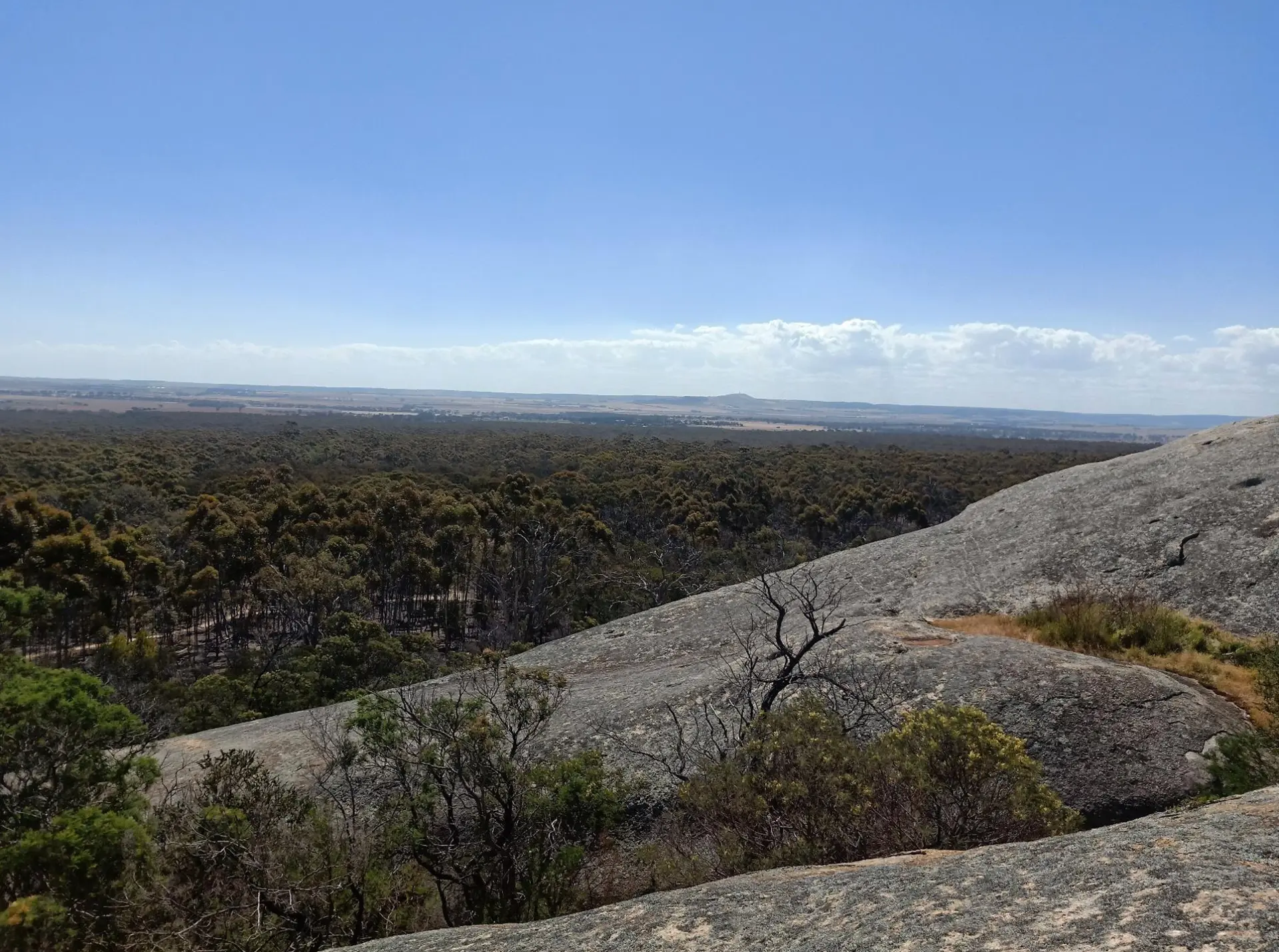
Granite outcrop looking out over woodland on Wadawurrung Country

Our Values

Nine things we want to keep healthy

Values are the main features we value on Wadawurrung Country — cultural, ecological, economic. For each one we set a goal and chose indicators, like a doctor taking blood pressure to see if our heart is healthy.

01

Wadawurrung culture and people

How we connect with the spirit of our ancestors is what connects us.

Aunty Vi, Wadawurrung Elder

We are the protectors and carers of this Country and this Country protects and cares for us. When Country is sick, we are sick. Our stories, dances and songs keep us strong in our culture, and our lore and law guide us in keeping our people and Country connected and healthy.

Goal

  • By 2025, 70% of Wadawurrung Traditional Owners have strong cultural connection and knowledge — practising culture and speaking language.

Indicators

  • % of Wadawurrung people speaking to each other in language
  • Participation in community events

02

Wadawurrung cultural sites and places

By touching the scars on the tree, you are connecting directly with your ancestors.

Uncle Bryon Powell, Wadawurrung Elder

Stone huts and stone arrangements, rock wells, artefact scatters, ochre pits, oven hearths, grinding grooves, scar, birthing and ring trees, geoglyphs, rock art and ceremony places — plus the intangible places our songlines and creation stories pass through.

Goal

  • By 2029, Wadawurrung people are involved in the management of all known sites.

Indicators

  • % of known sites protected

03

Enterprise and employment

We will seek ways to have our Country once again as the rightful economic basis for our people's enterprise and employment — a Caring for Country team and enterprise, cultural education, art and tourism businesses, and aquaculture and agriculture that heal Country.

Goal

  • By 2030, 60% of Wadawurrung people who want to work on Country have jobs or businesses.

Indicators

  • Number of Wadawurrung owned businesses
  • % of Wadawurrung people employed on-Country

04

Bush tucker, medicines and resources

Our ancestors were innovative; the use of warrigal greens is the first recorded use of insulation technology for shelters.

Melinda Kennedy, Wadawurrung Traditional Owner

Our Country is our supermarket, hardware store, clothing store and pharmacy — murnang (yam daisy), go-yin and goim, walert, buniya caught in eel traps, and plant medicines such as black wattle gum resin and the many uses of the wiyn (grass tree).

Goal

  • By 2030, there is enough of Wadawurrung People's favourite bush tucker.

Indicators

  • % of Wadawurrung bush tucker available

05

Yulluk — waterways, rivers, estuaries and wetlands

All our waters are living sources from Bundjil — the Karringalabul Murrup, the Creator spirit. Our waters were made for our survival, the survival of all things living.

Melinda Kennedy, Wadawurrung Traditional Owner

Barre Warre Yulluk — the great river running from the mountains to the ocean. The Barwon, Moorabool, Yarowee and Leigh rivers, Fyansford where the Barwon and Moorabool meet, and the Connewarre wetland complex of our Black Swan Dreaming. Our waterways were our highways.

Goal

  • By 2030, there is enough water in the waterways of Barre Warre Yulluk that it flows through the system, without barriers, and is clean enough to drink.

Indicators

  • Water quality
  • Amount of water
  • Cultural flows
  • % of economic access to water
  • Number of artificial barriers in waterways

06

Inland Country

Western volcanic plains and grasslands, grassy eucalypt woodlands, the You Yangs and Anakie Youang, an 11,000-year-old stone arrangement that pre-dates the pyramids, Kareet Bareet and Lal Lal. Victorian Volcanic Grasslands are now one of the most threatened ecological communities, with less than 5% remaining.

Goal

  • By 2030, the current extent of volcanic grasslands and woodlands is increased by 5%.

Indicators

  • Extent of volcanic grasslands
  • Age classes of woodlands
  • % of grasslands with cultural burning
  • % of cultural foods in grasslands

07

Coastal Country

From the Werribee River through the Avalon Coastal Reserve, Djilang, Bellawiyn and along the Barwon, Torquay and Airey's Inlet coastline. We have the largest stretch of registered cultural sites in Australia along our coastline.

Goal

  • By 2029, native vegetation extent remains or increases and cultural places are protected.

Indicators

  • Extent of moonah, ironbark and heathlands
  • % of cultural sites assessed by Wadawurrung
  • Condition of coastal cultural sites
  • Increased breeding of shorebirds

08

Warre — Sea Country

Our links to coastal and sea Country are vital! They continue to be a place where we can swim, fish, harvest and connect.

Melinda Kennedy, Wadawurrung Traditional Owner

Pt. Phillip Head and Pt. Addis Marine National Parks, Barwon Bluff Marine Sanctuary, saltmarshes, seagrass beds and kelp forests that shelter rock lobster and abalone. Pollution, overuse and warming waters are changing our Warre.

Goal

  • By 2030, the warre (sea) life in species, the seaweed and water quality remains at 2020 numbers and levels.

Indicators

  • % of kelp forest and dependent sea life
  • % of sea grass with sea grass dependent fish
  • % of Wadawurrung people accessing sea resources

09

Native animals

Echidna and Yoorn (spotted-tailed quoll), Porronggitj (brolga), emu, frogs, reptiles, fish, eels and insects. Some are totemic species we have obligations to protect and look after, like Connewarre (black swan).

Goal

  • By 2030, no more of our native animals have become threatened.
  • By 2035, at least one threatened species is no longer threatened.

Indicators

  • Numbers of different types of native animals
  • Numbers of threatened species: Striped Legless Lizard, Golden Sun Moth, Growling Grass Frog
  • Number of Wadawurrung people who know and are looking after their totemic animals